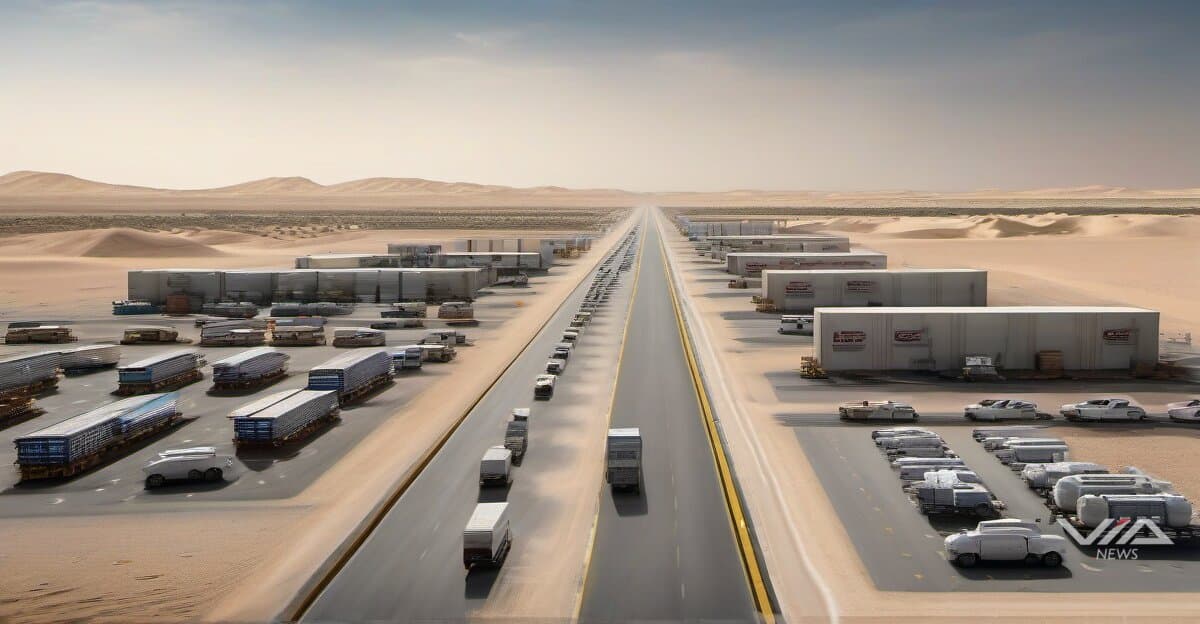
European companies routing electric vehicle components through UAE logistics hubs face supply chain disruption if Gulf diplomatic tensions escalate, according to a geopolitical risk assessment published May 20.1
Qatar's government-led EV infrastructure push has drawn European technology partners into long-term commitments. Those contracts now carry direct exposure to regional instability.
The 2017–2021 GCC blockade — when Saudi Arabia, the UAE, Bahrain, and Egypt severed ties with Qatar — showed how quickly Gulf logistics networks can fracture.1 A recurrence would hit EU companies at a critical moment. EV component flows through UAE transshipment hubs are growing as European automakers source battery materials and electronics from Asian suppliers.
The assessment rates a blockade-type scenario as low likelihood but catastrophic severity if it materialises.1 Qatar's government is actively expanding EV charging infrastructure and electrifying public transport, making it an increasingly significant destination for European industrial investment.
Foreign technology partners face dual exposure. First, physical supply chain disruption: UAE ports and free zones serve as primary transshipment nodes for components moving between Asia and Europe. Second, contract risk: prolonged regional instability deters European firms from committing to Qatar-based infrastructure projects.
EU importers have limited alternative routes if UAE logistics capacity becomes constrained. Rerouting through Oman or Saudi Arabia adds time and cost. Air freight cannot absorb bulk component volumes at scale.
European procurement teams have largely treated Gulf logistics as a stable channel. The 2017 blockade stress-tested that assumption and demonstrated how rapidly regional diplomacy can override commercial arrangements.
Risk managers at EU manufacturers with Asian supply chains should audit UAE and Qatar logistics dependencies now. Contingency routing, inventory buffers, and contract force majeure clauses are the practical levers available before any crisis materialises.
Qatar's EV investment agenda — framed under government policy, infrastructure investment, and sustainability priorities — is accelerating. That makes the current window of stability commercially valuable, and any disruption proportionally more damaging to European partners already embedded in the supply corridor.