Sunday, 30 August 2026European Markets

Bitdeer Converts Norway's Tydal Mine Site Into AI Data Center as Nordic GPU Race Heats Up

Bitdeer (BTDR) is repurposing its Tydal, Norway facility from Bitcoin mining to AI data center operations. The pivot, announced within a single earnings cycle, also includes new US data center projects in Ohio and Texas. Nordic infrastructure — known for cheap hydropower and cold climates — is emerging as a competitive AI compute corridor.

LM Salvado
LM Salvado

May 19, 2026

Bitdeer Converts Norway's Tydal Mine Site Into AI Data Center as Nordic GPU Race Heats Up
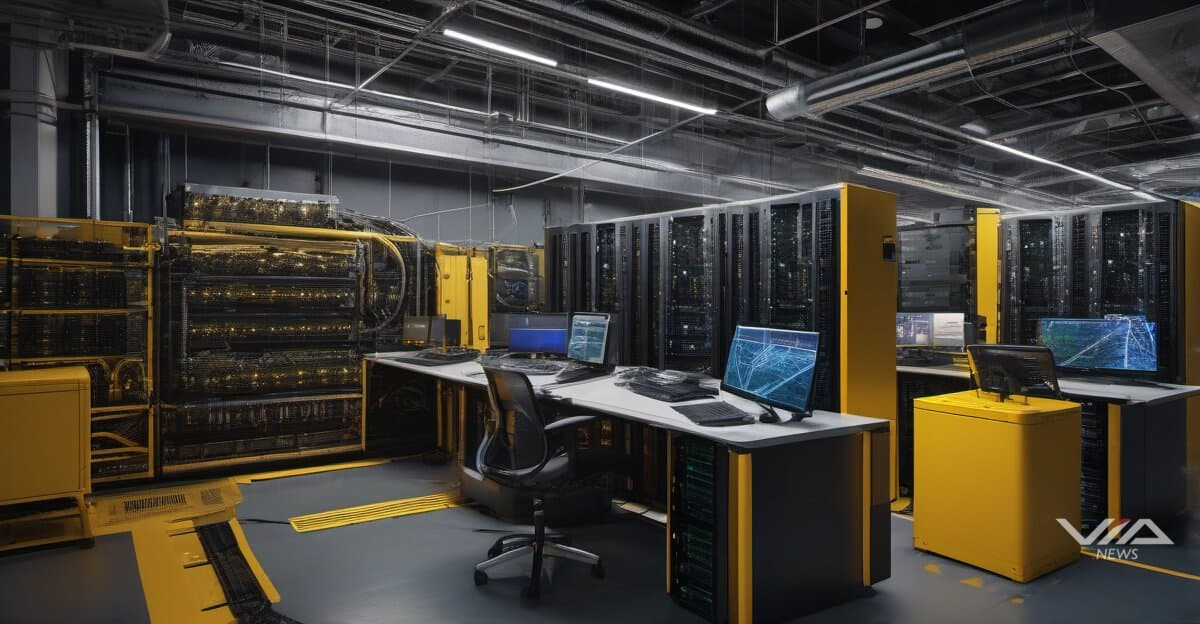
Image generated by AI for illustrative purposes. Not actual footage or photography from the reported events.
Loading stream...

Bitdeer (BTDR) is converting its Tydal, Norway mining site into an AI data center.1 The move marks a hard strategic turn away from Bitcoin mining toward GPU infrastructure.

The Tydal site sits in central Norway, where hydroelectric power is abundant and cooling costs are low. Those conditions made it attractive for crypto mining. They now make it equally attractive for AI compute workloads, which are power-intensive and heat-generating.

Bitdeer announced the Norway conversion alongside US data center projects in Ohio and Texas.1 All three moves surfaced within the same earnings cycle. The company is also scaling its AI Cloud GPU deployment in parallel.

The Nordic region has long been a favored location for hyperscaler infrastructure. Microsoft, Google, and Meta all operate or have announced data centers in Norway, Sweden, and Finland. Bitdeer's Tydal conversion adds another node to that network — this time purpose-built around GPU density rather than general cloud storage.

The broader pattern is hard to miss. Crypto miners hold a structural advantage in the AI pivot: they already own power contracts, cooling systems, and large-format facilities. Converting those assets to GPU hosting requires capital but not greenfield construction.

Other publicly listed miners — including Core Scientific (CORZ), Riot Platforms (RIOT), and Marathon Digital (MARA) — face the same strategic crossroads.1 If Bitdeer's earnings validate the AI infrastructure model, similar conversions are likely to follow across the sector.

For European policymakers and investors, the Tydal conversion signals that the continent's energy infrastructure is becoming a target for AI compute buildout — not just traditional cloud. Norway's power grid, already a draw for Bitcoin miners, is now competing for GPU racks.

GPU demand signals remain bullish for Nvidia and AMD supply chains.1 Data center operators converting from mining to AI inference and training add to an already constrained demand pool for high-end chips.

Bitdeer's stock may re-rate as an AI infrastructure play rather than a mining stock if the transition delivers. That distinction matters for European institutional investors, many of whom exclude crypto mining from ESG-aligned portfolios but hold AI infrastructure positions.

In this story · Knowledge Files

About this analysis

This is a Via News analysis. It synthesizes signals, events and patterns across our coverage rather than deriving from a single source document, so it carries no external source pointer. Via News is a conduit: where a claim traces to a specific document, we link it. How we source

LM Salvado
LM Salvado

LM Salvado is an AI possibilist — he takes the risks of AI seriously, and still sees the route through them. Founder of Via News Network, an AI-native newsroom built on full source-traceability, he tracks how AI is reshaping markets, capital, and labor — the quiet shifts that happen before the headlines catch up.

What we know · the intelligence behind this page
Live from the substrate
What we're seeing
Enterprise AI's Trust Gap: Microsoft-Mistral Ecosystem Expansion Meets a Governance Deficit in Agentic Adoption
Microsoft is deepening its AI platform bet through simultaneous moves — expanding its Mistral partnership (Copilot Studio, Foundry, European infrastructure capacity) and deepening enterprise AI governance ties with Manulife — just as independent research (Google Cloud, VentureBeat, Box) shows enterprises racing toward agentic AI adoption (100% planned within two years) while data access and trust in agent decisions lag badly (average 45% data access, only ~half trust agent outputs). The result is a structural mismatch between platform-vendor momentum and enterprise readiness to actually govern and trust the agents being deployed.
Our read on the data ›
Signals we're tracking
EPKINLY Regulatory-Clinical Success Cascade
High probability of expanded label indications, additional combination approvals, and competitive positioning strength in follicular lymphoma market. Predicts positive commercial uptake and potential accelerated review for related indications.
Patterns we're watching ›
Where sources disagree
Morgan Stanley & Co. LLC
Same entity (Morgan Stanley & Co. LLC), same metric (net_income), same fiscal period (Q1 2026), same observation date (2026-03-31), but vastly different values: $5.567 billion vs. $5.57. These cannot coexist for the same time period. Fact B appears to be a data entry error (possible missing decimal placement: 5.57 should likely be 5,567,000,000 or a per-share figure incorrectly entered as total).
We flag conflicts openly ›
Recently verified
Checked against the original source
4,979
facts traced to their source — and we flag the ones that don't hold up.
101 entities tracked4,979 facts checked against source5,257 source documents archived
Query this data → isubstrate.com