Saturday, 3 October 2026European Markets

Euro Surges 14% Against Dollar, Strongest Performance Since 2022

The Euro has gained 14% against the U.S. dollar in 2025, reaching its highest level since 2022 as broad-based dollar weakness reshapes currency markets. European exporters stand to benefit from improved competitiveness, while carry trade opportunities emerge for European investors amid global monetary policy shifts.

Euro Surges 14% Against Dollar, Strongest Performance Since 2022
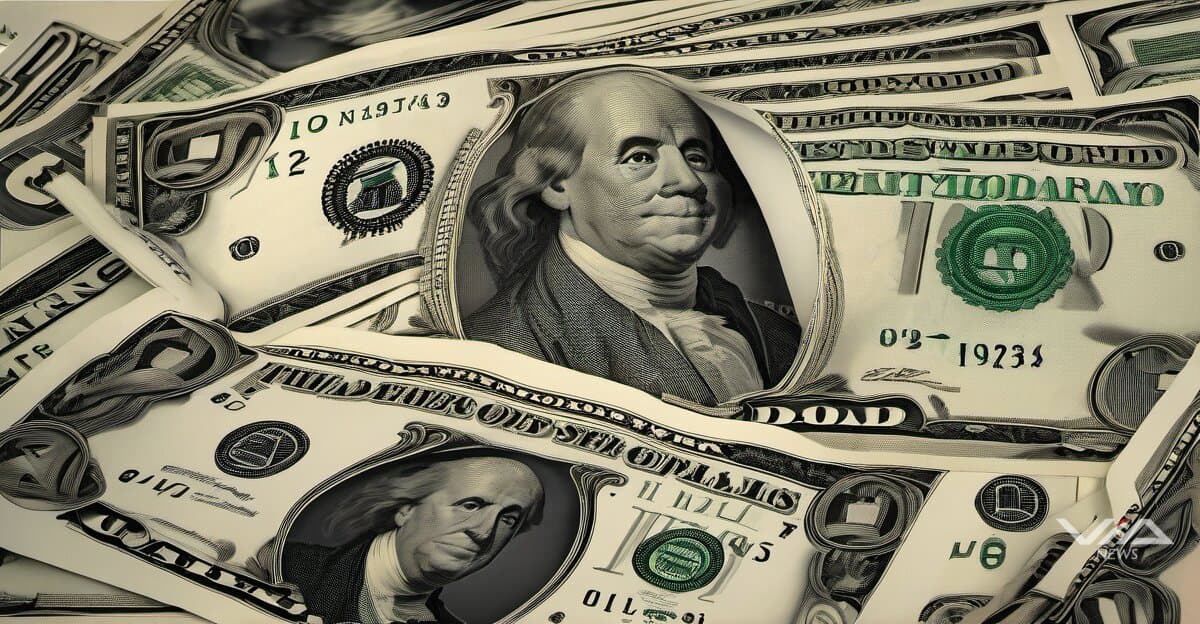
Image generated by AI for illustrative purposes. Not actual footage or photography from the reported events.
Loading stream...

The Euro has climbed 14% against the U.S. dollar in 2025, marking its strongest performance in three years as the greenback falls to levels not seen since 2022.

Major European currencies have posted significant gains, with the British Pound up 7% against the dollar. The Dollar Index tracks a basket of major currencies and reflects broad-based weakness across forex markets.

European exporters gain competitive advantages from the stronger Euro. German manufacturers and French luxury goods producers can now price products more attractively in dollar-denominated markets, particularly in the United States and Asia.

Currency traders face new opportunities and risks. Carry trade strategies—borrowing in low-yield currencies to invest in higher-yielding assets—have attracted investor attention as currency volatility increases.

The Turkish Lira collapsed 17% after carry trade positions unwound, demonstrating the strategy's risks. European investors with exposure to emerging market currencies through carry trades faced substantial losses.

Geopolitical developments contribute to dollar weakness. Progress on Iran-U.S. nuclear deal negotiations has reduced risk premiums that traditionally support dollar demand during international tensions.

The Federal Reserve faces a leadership transition in June 2026, creating uncertainty around U.S. monetary policy direction. Markets anticipate potential policy shifts that could further weaken the dollar.

European institutional investors are repositioning portfolios. Currency hedge costs have dropped for European pension funds and insurers holding U.S. assets, improving returns on dollar-denominated investments.

The Pound trades at €1.13 against the Euro despite its gains versus the dollar, sitting at its lowest level against the Euro since April 2023. UK gilt yields have climbed to 5.21% for 30-year bonds, the highest since 1998.

European currency strength creates challenges for tourism-dependent economies. Spain, Italy, and Greece face headwinds as their destinations become more expensive for American and Asian tourists paying in dollars or dollar-pegged currencies.

Forex analysts monitor the situation closely. Currency markets show 85% confidence in continued dollar weakness based on technical indicators and policy expectations.

European central banks maintain current policy stances. The European Central Bank has not signaled intervention despite the Euro's appreciation, indicating tolerance for current exchange rate levels.

Source documents

Via News is a conduit. We point to the source documents behind this report — we don't replace them. Trace any claim to its source and decide what to trust. How we source

Source Trace Score3 source documents3 with a live linkVerifiability: Strong
  1. [1]News articleUk· November 12, 2025
    Pound hits two-year low against euro as Starmer under fire
  2. [2]News articleYahoo Finance· December 31, 2025
    Stock market today: Dow, S&P 500, Nasdaq post double-digit gains in 2025 as AI trade powers market once again
  3. [3]News articleYahoo Finance· February 17, 2026
    Stock market today: Dow, S&P 500, Nasdaq waver in volatile trading as AI anxiety lingers

In this story · Knowledge Files

What we know · the intelligence behind this page
Live from the substrate
What we're seeing
Pharma Pipeline Catalysts and M&A Heat Up as AI-Designed Drugs Enter the Clinic
Late-September 2026 brought a dense run of clinical readouts: Novo Nordisk's CagriSema data at EASD, Lilly's ADtouch results for EBGLYSS, and Merck's tulisokibart Phase 2b result. Lilly's $2.9B Merida Biosciences acquisition and the 2026-11-14 FDA PDUFA date for ivonescimab sit alongside these as the main deal and regulatory events. AI-designed drugs such as rentosertib, and speculative AI-linked trial ventures such as QAIAx, are moving from hype toward clinical validation. Broader AI-sector regulatory and legal friction (Tesla Cybercab probe, xAI Minnesota ruling, OpenAI lawsuits) shows rising scrutiny that could spill into AI-driven healthcare.
Our read on the data ›
Signals we're tracking
Satellite-Terrestrial Network Integration Acceleration
Increased investment and launches in hybrid satellite-cellular networks across telecom industry; competitive responses from other carriers; regulatory activity around satellite spectrum; expansion of emergency/rural connectivity use cases
Patterns we're watching ›
Where sources disagree
Apple Inc.
The observation date (2025-12-27) precedes Q1 2026, making it logically impossible to have actual Q1 2026 cash data at that point. Q1 2026 would not end until March 31, 2026. Additionally, the magnitude of the difference ($45.3B vs $132.42) is implausibly large even as a normal quarterly change for Apple. While different fiscal periods can show different values, the timing relationship here suggests a data integrity issue rather than legitimate period-over-period variation.
We flag conflicts openly ›
Recently verified
✓ Checked against the original source
4,985
facts traced to their source — and we flag the ones that don't hold up.
101 entities tracked4,985 facts checked against source5,329 source documents archived
Query this data → isubstrate.com