
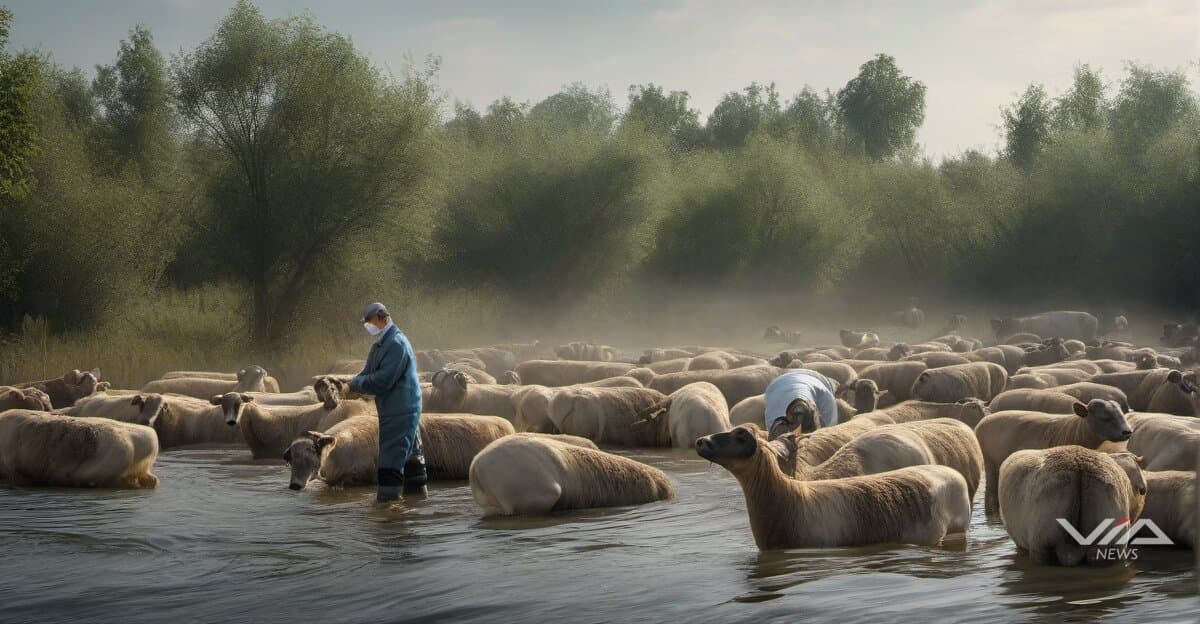
Nordic Aqua's Ningbo facility, Asia's first large-scale land-based salmon project, carries catastrophic disease outbreak risk rated at medium likelihood by recent operational assessments. The Norwegian-backed operation could lose complete stock if biosecurity protocols fail in its recirculating aquaculture system (RAS).
The facility targets 8,000 tons annual production by 2027 across its first two phases, with phase three expansion pushing capacity to 20,000 tons. High-density land-based farming amplifies disease transmission risk compared to traditional open-net operations, where water flow naturally dilutes pathogens.
RAS technology recirculates water through biological filters, creating closed-loop environments that concentrate both nutrients and potential diseases. A single biosecurity breach—contaminated equipment, infected fingerlings, or airborne pathogens—can cascade through the entire system within days. Norwegian operators like Atlantic Sapphire and Salmon Evolution have documented similar risks in North American and European facilities.
Land-based salmon farming costs €6-8 per kilogram to produce versus €4-5 for traditional sea cages, according to Norwegian Seafood Council data. The technology promises year-round production and proximity to Asian consumers, but capital intensity and operational complexity create narrow profit margins vulnerable to catastrophic loss events.
China imported 38,000 tons of Norwegian salmon in 2025, up 22% year-over-year, making local production strategically attractive despite elevated risk profiles. Nordic Aqua's Ningbo location targets Shanghai and eastern China markets where fresh salmon commands premium pricing.
The assessment assigns 70% confidence to risk projections, reflecting limited operational history for large-scale land-based facilities in Asian climates. Temperature control, water chemistry management, and staff training protocols all influence disease outbreak probability in RAS environments.
Norwegian aquaculture companies invested €420 million in Asian land-based projects between 2023-2025, betting that technology improvements and market proximity offset higher operational risks. Nordic Aqua represents the largest single investment in this expansion strategy, testing whether European aquaculture expertise translates to Asian market conditions.