Saturday, 3 October 2026European Markets

EP Group's €1.2B Fnac Darty Bid Faces EU Antitrust Scrutiny Over Strategic Retail Control

Daniel Křetínský's EP Group faces medium-likelihood regulatory rejection of its Fnac Darty acquisition as French and EU competition authorities examine foreign ownership of strategic European retail assets. The Czech billionaire's investment firm is pursuing a public tender offer for the electronics and cultural goods retailer valued at approximately €1.2 billion.

EP Group's €1.2B Fnac Darty Bid Faces EU Antitrust Scrutiny Over Strategic Retail Control
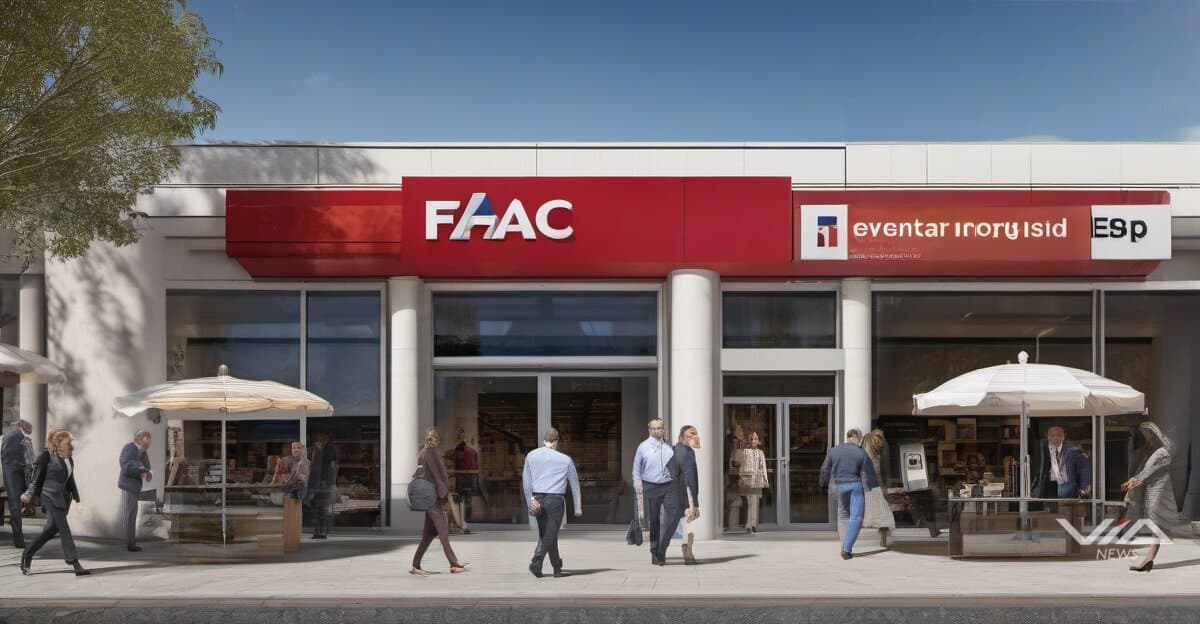
Image generated by AI for illustrative purposes. Not actual footage or photography from the reported events.
Loading stream...

EP Group's public tender offer for Fnac Darty confronts potential antitrust rejection from French and EU competition authorities scrutinizing foreign control of strategic retail infrastructure. The acquisition attempt by Daniel Křetínský's investment vehicle carries a medium probability of regulatory blockage, according to risk assessments tracking the €1.2 billion transaction.

French competition regulators are examining whether transferring ownership of Fnac Darty—a major electronics, appliances, and cultural goods retailer—to foreign investment entities threatens national retail security. The company operates 900+ stores across France, Switzerland, Belgium, Spain, and Portugal, positioning it as critical European consumer retail infrastructure.

EU antitrust officials are applying heightened scrutiny to foreign acquisitions of strategically important retail networks following increased consolidation activity in the sector. Křetínský, a Czech billionaire who controls energy, media, and retail assets across Europe through EP Group, has built positions in Royal Mail, Sainsbury's, and Casino Guichard-Perrachon.

The regulatory risk reflects broader EU policy protecting retail distribution networks from non-European ownership concentration. Competition authorities evaluate whether private equity control could compromise pricing stability, employment protections, or supply chain security for essential consumer goods.

Fnac Darty generated €7.4 billion revenue in 2024, operating France's largest electronics retail network and maintaining significant cultural product distribution through book and media sales. Regulators consider the retailer's market position in consumer electronics, household appliances, and editorial content distribution when assessing foreign ownership implications.

EP Group structured the acquisition as a voluntary public tender offer, requiring approval from French financial markets authority AMF and competition clearance from Autorité de la concurrence. EU Commission review triggers if the transaction meets turnover thresholds under the Merger Regulation.

The medium-confidence catastrophic risk rating indicates regulators could impose structural remedies or outright prohibition to preserve European control of strategic retail distribution. Křetínský's previous acquisitions faced similar scrutiny but secured approval through commitments on employment and operational independence.

What we know · the intelligence behind this page
Live from the substrate
What we're seeing
Pharma Pipeline Catalysts and M&A Heat Up as AI-Designed Drugs Enter the Clinic
Late-September 2026 brought a dense run of clinical readouts: Novo Nordisk's CagriSema data at EASD, Lilly's ADtouch results for EBGLYSS, and Merck's tulisokibart Phase 2b result. Lilly's $2.9B Merida Biosciences acquisition and the 2026-11-14 FDA PDUFA date for ivonescimab sit alongside these as the main deal and regulatory events. AI-designed drugs such as rentosertib, and speculative AI-linked trial ventures such as QAIAx, are moving from hype toward clinical validation. Broader AI-sector regulatory and legal friction (Tesla Cybercab probe, xAI Minnesota ruling, OpenAI lawsuits) shows rising scrutiny that could spill into AI-driven healthcare.
Our read on the data ›
Signals we're tracking
Satellite-Terrestrial Network Integration Acceleration
Increased investment and launches in hybrid satellite-cellular networks across telecom industry; competitive responses from other carriers; regulatory activity around satellite spectrum; expansion of emergency/rural connectivity use cases
Patterns we're watching ›
Where sources disagree
Apple Inc.
The observation date (2025-12-27) precedes Q1 2026, making it logically impossible to have actual Q1 2026 cash data at that point. Q1 2026 would not end until March 31, 2026. Additionally, the magnitude of the difference ($45.3B vs $132.42) is implausibly large even as a normal quarterly change for Apple. While different fiscal periods can show different values, the timing relationship here suggests a data integrity issue rather than legitimate period-over-period variation.
We flag conflicts openly ›
Recently verified
✓ Checked against the original source
4,985
facts traced to their source — and we flag the ones that don't hold up.
101 entities tracked4,985 facts checked against source5,329 source documents archived
Query this data → isubstrate.com