
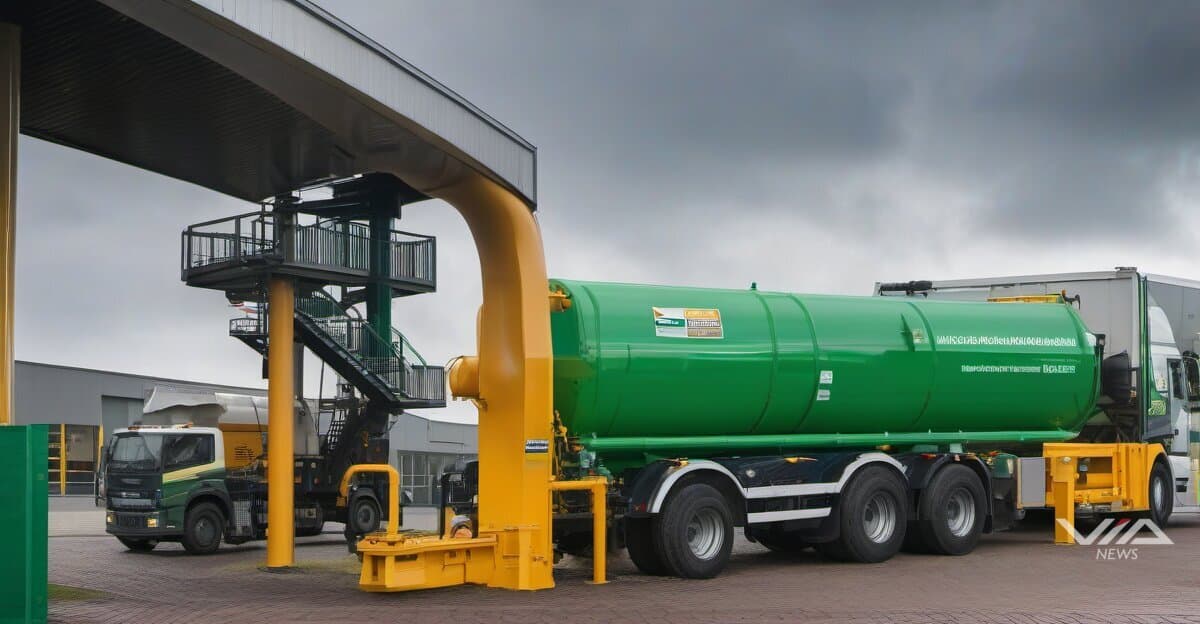
The Netherlands has postponed the start date of its mandatory green gas blending obligation by one year, with the requirement now set to take effect in January 2027 rather than 2026. To offset the delay, Dutch authorities have paired the revised timeline with increased blending targets for the first year of implementation — a compromise that underscores both the political will to advance green gas and the practical difficulties of doing so at scale.
The blending obligation, which requires gas network operators to mix a minimum proportion of green gas — primarily biomethane — into the distribution grid, is a central pillar of Dutch efforts to reduce the carbon intensity of heating and industry. The Netherlands is one of Europe's largest natural gas consumers, and its transmission infrastructure has long been regarded as a potential backbone for green gas distribution across the continent.
The one-year deferral, while modest in isolation, arrives at a sensitive moment for EU energy policy. Brussels has set ambitious targets for biomethane production under the REPowerEU plan, which calls for 35 billion cubic metres of biomethane output annually by 2030 — roughly ten times current European production levels. National blending mandates like the Dutch scheme are among the key regulatory instruments intended to create guaranteed demand and stimulate the upstream investment needed to hit that goal.
Delays of this kind have a direct knock-on effect for project developers and investors. Green gas infrastructure — from anaerobic digestion plants to grid injection points — typically requires long-term regulatory certainty to secure financing. A shifting mandate start date, even when accompanied by steeper initial targets, introduces uncertainty that can slow capital deployment and push project timelines further out.
The broader European context is instructive. Ellomay Capital, an Israeli-headquartered renewable energy group with significant operations in Italy, Spain, and the United States, noted in its most recent quarterly earnings report that regulatory changes represent a material constraint on forward planning. While the company's European portfolio is focused on solar rather than green gas, its experience illustrates a pattern familiar across the sector: investors operating in multiple EU jurisdictions must continuously adapt to shifting policy timelines, which complicates project development and return modelling.
For the green gas sector specifically, the Dutch delay may prove a bellwether. Several EU member states are at various stages of designing or implementing blending obligations, and the Netherlands — with its dense gas grid and established biomethane industry — has been closely watched as a regulatory model. A stumble here risks signalling to other capitals that implementation is harder than anticipated, potentially emboldening those seeking to slow or water down similar mandates elsewhere.
Proponents of the revised Dutch framework argue that the higher first-year targets effectively preserve the medium-term trajectory and that a brief delay is preferable to launching an underprepared scheme that fails to deliver. Critics counter that the cumulative effect of phased delays across member states could leave the EU's 2030 biomethane targets severely underfunded in terms of the regulatory demand signals needed to attract private capital.
The coming months will be telling. If the Netherlands proceeds firmly with the 2027 launch and achieves its elevated initial blending rates, the delay may come to be seen as a pragmatic recalibration. If further postponements follow, it will raise harder questions about whether the EU's green gas ambitions are being matched with the regulatory backbone required to make them investable.