Monday, 21 September 2026European Markets

European gas prices surge 85% after Iran-attributed attacks on energy infrastructure across nine countries

Energy infrastructure attacks attributed to Iran have triggered an 85% spike in European gas prices and pushed oil above $80 per barrel. The strikes targeted facilities across nine countries, exposing critical vulnerabilities in European energy security. EU policymakers now face urgent decisions on infrastructure protection and supply diversification as winter demand approaches.

European gas prices surge 85% after Iran-attributed attacks on energy infrastructure across nine countries
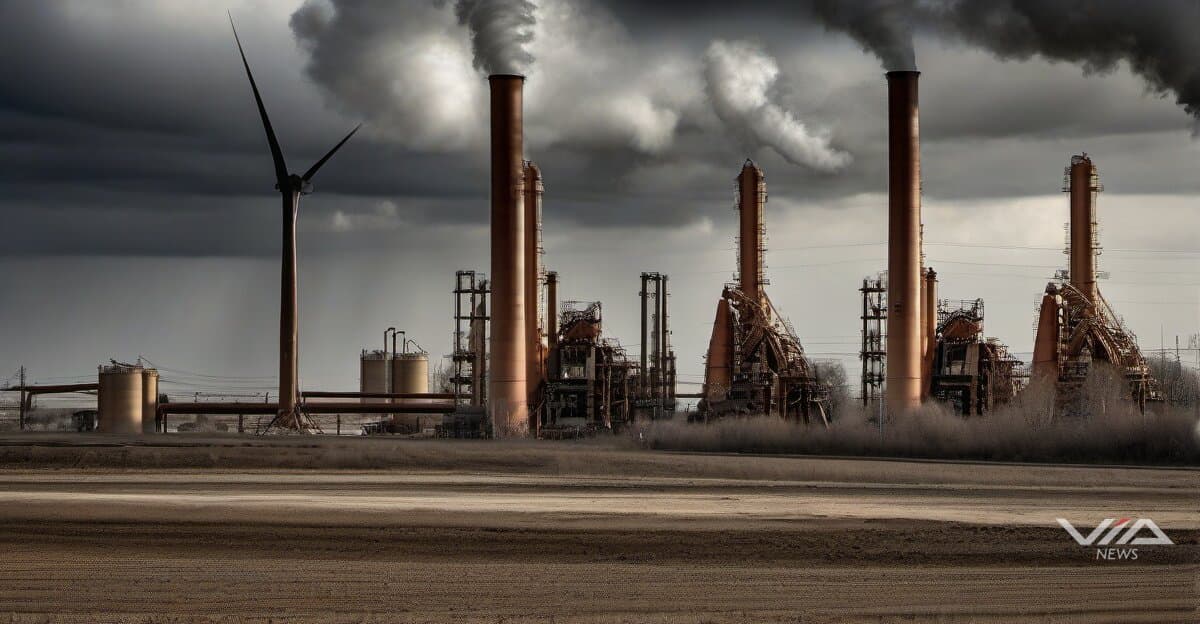
Image generated by AI for illustrative purposes. Not actual footage or photography from the reported events.
Loading stream...

European natural gas prices surged 85% following coordinated attacks on energy infrastructure across nine countries that Western intelligence agencies have attributed to Iran. Oil prices climbed 8% above $80 per barrel as markets assessed supply risks.

The attacks targeted critical energy facilities including pipelines, storage terminals, and processing plants. European nations depend on interconnected infrastructure to distribute gas supplies, making the system vulnerable to cascading disruptions.

Germany and Poland face the most acute exposure, with both countries still working to replace Russian pipeline gas lost since 2022. LNG import terminals in northwestern Europe have operated near capacity, leaving limited buffer for supply shocks.

The price spike compounds inflation pressures across the eurozone. Energy costs feed directly into electricity prices and manufacturing inputs, threatening industrial competitiveness. Chemical and fertilizer producers have already curtailed operations in response to elevated gas prices.

EU energy ministers convened emergency talks to coordinate responses. Options under discussion include tapping strategic gas reserves, accelerating LNG import capacity expansions, and implementing demand reduction measures similar to winter 2022 protocols.

Infrastructure security has moved to the top of the policy agenda. The attacks revealed gaps in physical protection of energy facilities and monitoring of critical chokepoints. EU officials are examining requirements for enhanced surveillance and rapid response capabilities.

Supply diversification remains the longer-term imperative. European gas imports still rely heavily on a handful of export terminals and pipeline routes. Norway has increased production but cannot fill gaps from lost Russian volumes and now these attack-related disruptions.

The crisis arrives as European governments negotiate 2030 renewable energy targets. Some policymakers argue the attacks demonstrate the strategic necessity of domestic clean energy production. Others warn that accelerating fossil fuel phaseout increases transition vulnerability.

Financial markets have priced in extended elevated energy costs. European utility stocks rose 6% as power generators benefit from higher wholesale prices. Industrial manufacturers declined as investors factored in margin compression from energy input costs.

The infrastructure attacks mark the first large-scale energy security crisis since Russia cut pipeline deliveries in 2022. European energy independence remains elusive despite two years of policy focus on supply chain resilience.

Source documents

Via News is a conduit. We point to the source documents behind this report — we don't replace them. Trace any claim to its source and decide what to trust. How we source

Source Trace Score3 source documents3 with a live linkVerifiability: Strong
  1. [1]News articleYahoo Finance· February 9, 2026
    Warsh Call for Fed-Treasury Accord Stirs Debate in $30 Trillion Bond Market
  2. [2]News articleUk· March 3, 2026
    LIVE: Reeves to deliver spring statement as traders scale back Bank of England rate cut bets
  3. [3]News articleYahoo Finance· March 3, 2026
    Stock market today: Dow plunges over 1,100 points, S&P 500 and Nasdaq sink as oil surges amid war worries
What we know · the intelligence behind this page
Live from the substrate
What we're seeing
Frontier AI Slowdown Call Splits Industry, Rattles Capex-Sensitive Markets
Anthropic's Dario Amodei publicly called for a coordinated global slowdown in frontier AI development, a stance Microsoft echoed with a 'humanist' AI code of conduct, but Nvidia and Meta's CEOs rejected any coordinated pause days later, exposing a widening rift between safety-focused and growth-focused AI leaders. The dispute landed amid growing financial scrutiny of AI infrastructure spending — a hyperscaler capex analysis, FTC warnings against antitrust waivers for AI firms, and an 8.6% single-day stock drop in GE Vernova tied directly to the slowdown remarks — signaling investors are newly nervous about whether the AI capex boom (including Alphabet's projected $701B revenue narrative) can be justified if the pace of development itself becomes contested.
Our read on the data ›
Signals we're tracking
Satellite-Terrestrial Network Integration Acceleration
Increased investment and launches in hybrid satellite-cellular networks across telecom industry; competitive responses from other carriers; regulatory activity around satellite spectrum; expansion of emergency/rural connectivity use cases
Patterns we're watching ›
Where sources disagree
ING Group
Both facts record the same metric (shares_outstanding) for ING Group at the identical observation date (2025-12-31). FACT A states 2,902,437,688 shares; FACT B states 2,902 million shares (2,902,000,000). The difference is 437,688 shares (~0.015%). This is a genuine value conflict, though the discrepancy appears to result from FACT B rounding to the nearest million while FACT A provides the precise count.
We flag conflicts openly ›
Recently verified
Checked against the original source
4,983
facts traced to their source — and we flag the ones that don't hold up.
101 entities tracked4,983 facts checked against source5,304 source documents archived
Query this data → isubstrate.com