
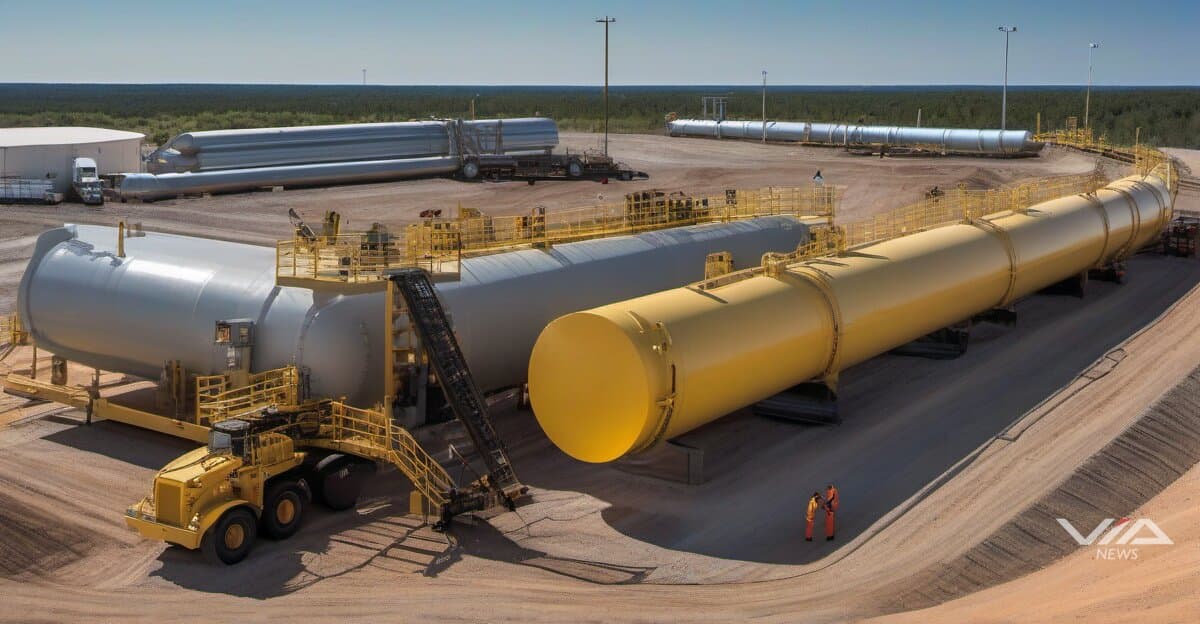
A 2.5 billion cubic feet per day pipeline linking Permian Basin production to Gulf Coast LNG export terminals will begin operations by December 2028, according to MPLX LP. The Blackcomb Pipeline represents approximately 3.6% of current US LNG export capacity.
US LNG shipments to Europe reached 56 billion cubic meters in 2023, making America the EU's largest gas supplier. The 27-nation bloc has replaced Russian pipeline gas with a mix of Norwegian flows, domestic production cuts, and waterborne LNG since 2022.
Gulf Coast terminals at Sabine Pass, Corpus Christi, Cameron, and Freeport account for 90% of US LNG exports. Pipeline constraints from inland production basins to coastal facilities have limited export growth despite rising European demand.
The Permian Basin produced 20.5 Bcf/d of natural gas in December 2024, up 12% year-over-year. Associated gas from oil drilling has outpaced takeaway capacity, causing local price discounts that reached $2 per MMBtu below Henry Hub in 2023.
European buyers face intensifying competition for US LNG volumes. Asian importers paid premium prices during winter 2023-24, diverting 15% of planned European cargoes to Japan, South Korea, and China. Spot prices in northeast Asia averaged $3.50 per MMBtu above European benchmarks during peak demand periods.
Seven new US LNG export projects totaling 11.4 Bcf/d of capacity have received Federal Energy Regulatory Commission approval for construction starts between 2025 and 2027. The Biden administration paused new export permits in January 2024, though existing approvals remain valid.
European utilities have locked in long-term contracts for 60% of capacity at planned US facilities through 2030. Germany's RWE, Italy's Eni, and France's TotalEnergies signed 20-year supply agreements averaging 3.5 million tonnes per year each.
Pipeline infrastructure additions like Blackcomb will determine whether US producers can meet simultaneous European and Asian demand growth. Global LNG demand is projected to increase 50% by 2030, with Europe accounting for 20% of incremental consumption.
The project's 2028 timeline aligns with planned EU phase-outs of Russian LNG imports at several Baltic and Mediterranean terminals.