Monday, 24 August 2026European Markets
What we know · the intelligence behind this page
Live from the substrate
What we're seeing
AI Leadership Exodus Rattles Investor Confidence Amid Capex Boom
High-profile departures at top AI labs — Brad Lightcap's exit from OpenAI and an unnamed researcher's departure from Alphabet/Google that triggered a share-price drop — are surfacing talent retention as a market risk factor even as hyperscalers pour record capital into AI infrastructure. The reaction shows investors treating key-person risk at frontier AI labs as material to valuation, a new fragility layered onto an otherwise bullish AI-driven capex cycle.
Our read on the data ›
Signals we're tracking
Satellite-Terrestrial Network Integration Acceleration
Increased investment and launches in hybrid satellite-cellular networks across telecom industry; competitive responses from other carriers; regulatory activity around satellite spectrum; expansion of emergency/rural connectivity use cases
Patterns we're watching ›
Where sources disagree
Broadcom Inc.
Both facts report EPS for Broadcom Inc. for the same fiscal period (Q1 2026) observed on the same date (2026-02-01). However, they report conflicting values: 1.5 USD per share vs 2.05 USD per share. This is a 37% difference for the identical metric and time period, not a value change over time.
We flag conflicts openly ›
Recently verified
Checked against the original source
4,978
facts traced to their source — and we flag the ones that don't hold up.
101 entities tracked4,978 facts checked against source5,251 source documents archived
Work with this data → vianewsagency.com

European gas prices surge 85% as Iranian strikes target regional energy infrastructure

European natural gas prices jumped 85% following Iranian attacks on oil and gas infrastructure across multiple countries. Oil prices rose 8% while equity markets tumbled, with the S&P 500 down 2.5% and Korean stocks plunging 12%. The supply-side shock is reviving stagflation concerns as policymakers face simultaneous inflation and growth pressures.

European gas prices surge 85% as Iranian strikes target regional energy infrastructure
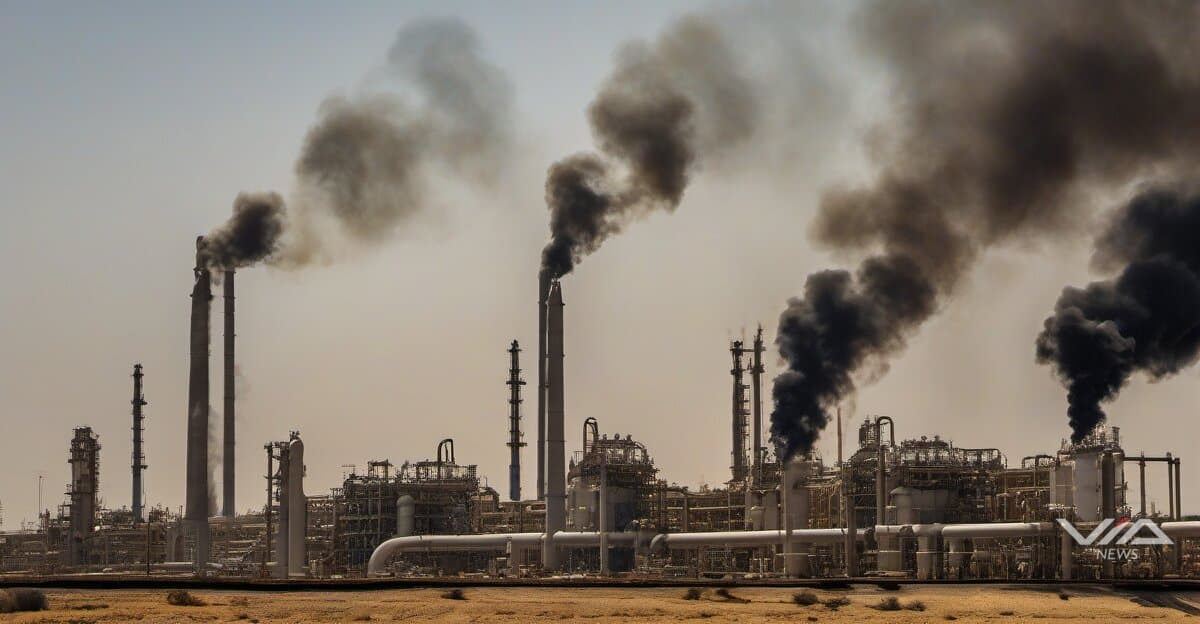
Image generated by AI for illustrative purposes. Not actual footage or photography from the reported events.
Loading stream...

European natural gas prices spiked 85% this week after Iranian forces targeted oil and gas infrastructure in a coordinated regional assault. The attacks triggered a severe supply-side inflation shock across global energy markets.

Oil prices climbed 8% in response to the strikes, which hit facilities across multiple countries. The disruption sent equity markets into decline, with the S&P 500 falling 2.5% and Korean stocks dropping 12% as investors fled risk assets.

European utilities and industrial consumers face acute pressure from the gas price surge. The continent's energy security remains fragile despite efforts to diversify supplies since the 2022 Russia-Ukraine crisis. Storage levels, while adequate for immediate needs, offer limited buffer against prolonged supply disruptions.

The crisis is forcing central banks to confront the prospect of stagflation—rising inflation amid slowing growth. Former Fed Vice Chair Richard Clarida said a new accord could "provide a framework for the Fed working in tandem with the Treasury" to manage balance sheet reduction during economic stress.

Tim Duy, chief US economist at SGH Macro Advisors, warned that yield-curve control frameworks "explicitly tie monetary operations to deficits." Such coordination could undermine central bank independence while attempting to stabilize bond markets.

Michael Ball of Goldman Sachs noted that mapping the Fed's balance sheet reduction "to a predictable Treasury debt plan" could prevent "accidental tightening of financial conditions." Markets need clarity on liquidity and supply trajectories, he argued.

European policymakers face different constraints than their US counterparts. The European Central Bank lacks fiscal coordination mechanisms available to the Fed-Treasury relationship. National governments must navigate energy subsidies and industrial support within EU state aid rules.

Energy-intensive industries including chemicals, steel, and fertilizer production are most vulnerable to sustained high gas prices. Some facilities have already curtailed operations, with further shutdowns likely if prices remain elevated.

The timing compounds Europe's challenges. Spring demand is typically lower, but utilities must begin refilling storage for next winter. Current prices make restocking prohibitively expensive, setting up potential shortages later this year.

Source documents

Via News is a conduit. We point to the source documents behind this report — we don't replace them. Trace any claim to its source and decide what to trust. How we source

Source Trace Score3 source documents3 with a live linkVerifiability: Strong
  1. [1]News articleYahoo Finance· February 9, 2026
    Warsh Call for Fed-Treasury Accord Stirs Debate in $30 Trillion Bond Market
  2. [2]News articleUk· March 3, 2026
    LIVE: Reeves to deliver spring statement as traders scale back Bank of England rate cut bets
  3. [3]News articleYahoo Finance· March 3, 2026
    Stock market today: Dow plunges over 1,100 points, S&P 500 and Nasdaq sink as oil surges amid war worries

In this story · Knowledge Files